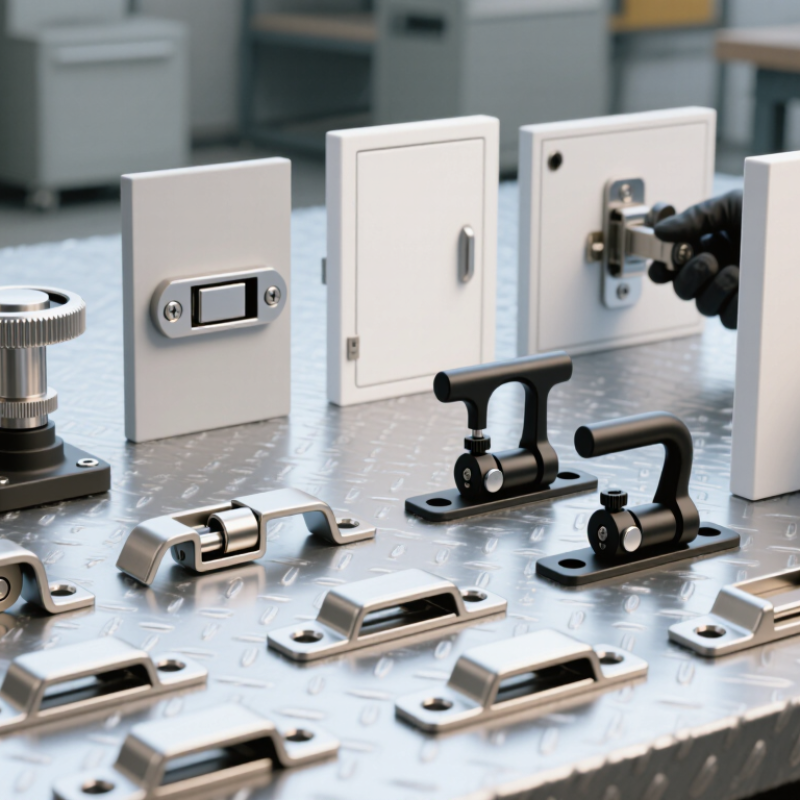
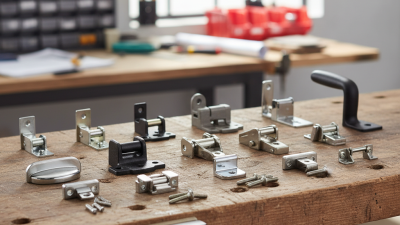
Selecting the right Pull Latch in 2026 requires more than comparing prices or viewing catalog photos. Global buyers need dependable hardware for cabinets, enclosures, vehicles, machinery, and outdoor equipment. A latch that feels strong in a showroom may loosen after vibration, dust, repeated cycling, or temperature changes.
Industrial hardware consultant Michael Turner explains, “A reliable latch is not judged by appearance alone; it must survive the environment where it will work.” This practical view shapes our evaluation. We examine compression latches, draw latches, over-center designs, slam-action models, recessed types, and adjustable Pull Latch solutions.
Small details matter. A stainless-steel body may resist corrosion near coastal facilities. A rubber seal can reduce water entry around an enclosure. A broad handle may remain usable with work gloves. Mounting holes, panel thickness, holding force, and operating clearance also deserve careful attention.
There is no universal winner.
Some designs offer speed. Others provide stronger compression or better security. Buyers must match the latch to real operating conditions, not only supplier descriptions. Certification documents, material data, cycle testing, and sample inspection can reveal weaknesses early.
This guide compares the 2026 best Pull Latch types for international purchasing teams. It considers performance, installation, maintenance, customization, availability, and long-term value. The ranking is useful, but not perfect. Supplier quality can change, and field results may differ from laboratory claims.
That is why practical testing remains essential. Open and close samples repeatedly. Check alignment. Apply vibration where possible. A careful decision today can prevent loose panels, damaged seals, and costly replacements later.
A pull latch is a mechanical fastener that secures two panels by pulling them tightly together. Its working principle is simple. A hook, catch, or draw bolt engages a fixed keeper. When the handle moves, the latch creates tension and closes the gap. This pressure helps reduce vibration, rattling, and accidental opening.
Common types include draw latches, toggle latches, compression latches, and recessed pull latches. Draw latches suit cases, access panels, and transport equipment. Compression latches add sealing pressure against dust or moisture. Recessed designs keep the handle inside the panel surface. That matters in narrow walkways. Buyers should check load direction, panel thickness, corrosion resistance, and operating space before selecting a model.
In field inspections, alignment often affects performance more than advertised strength. A latch may feel strong but fail when the keeper sits two millimeters off center. Measure both mounting holes and closed-panel gaps. Stainless steel can support demanding outdoor use, while coated steel may offer a practical indoor option. Material choice still depends on exposure and maintenance. No latch is perfect. A quiet mechanism may need more adjustment, and a heavy-duty design may feel inconvenient during daily access. Test the latch with gloves if operators will wear them. Small details decide.
Pull latches are not one uniform hardware family. Their bodies, hooks, and closing paths create different holding behaviors. Draw latches use a pivoting hook and adjustable keeper. Pulling the lever draws two panels together. They suit covers that need firm alignment. Toggle latches use an over-center linkage. The handle passes its neutral point, reducing accidental release. They usually tolerate small assembly variation. Compression latches add a cam or threaded spindle. They pull the panel tight while limiting vibration and rattle. Good fit matters. Too much preload can distort thin sheet metal.
Rotary pull latches use a rotating jaw rather than a simple hook. The jaw captures a striker and releases through a handle or cable. Their enclosed mechanism handles repeated cycling well. They are useful where the panel must close flush. Spring-loaded pull latches provide quick return and tactile feedback. However, spring force can weaken after heavy use or harsh temperature changes. Stainless steel improves corrosion resistance, but material alone does not guarantee durability. Drainage, surface treatment, and pin protection matter. No latch is perfect. In coastal installations, small gaps can hold salt and moisture for months.
Selection should follow the load path, not appearance. Check tensile load, shear load, vibration, access, and opening force. A hook latch may work on a light inspection door but fail on a vibrating enclosure. A compression type may seal well, yet demand accurate hole spacing. I have seen strong latches misalign because hinges sagged. Alignment is critical. Buyers should test samples with the actual panel, gasket, and keeper. Record cycle results, not only rated load. Ratings can vary by test method, and real assemblies are rarely perfect.
| Pull Latch Type | Primary Operating Mechanism | Main Structural Components | How the Load Is Retained | Typical Installation | Sealing Capability | Key Advantages | Main Limitations | Common Applications | Best Fit for Global Buyers |
|---|---|---|---|---|---|---|---|---|---|
| Over-Center Draw Latch | A lever rotates past a center point and pulls a keeper toward the latch body. | Lever handle, pivot pins, hook or claw, adjustable keeper, and latch body. | Mechanical over-center action maintains tension after the handle is closed. | Surface-mounted on panels, covers, boxes, cabinets, and equipment frames. | Good when combined with a gasket and adjustable tension; the latch itself is not automatically watertight. | Fast operation, adjustable pull-down force, compact design, and broad size availability. | Can open if the lever is not fully positioned over center; exposed versions may catch on surrounding objects. | Industrial enclosures, access covers, transport cases, machinery guards, and storage boxes. | General-purpose industrial and enclosure applications requiring repeatable clamping. |
| Compression Draw Latch | The closing movement pulls the panel toward the frame and compresses a gasket or seal. | Handle, link mechanism, hook or tongue, keeper, body, and often an adjustable spindle. | Retains the panel while applying controlled axial compression to the sealing surface. | Surface-mounted or recessed into a panel, depending on the housing design. | Very good when correctly selected with a compatible gasket and proper panel alignment. | Reduces vibration and rattling, supports environmental sealing, and provides controlled clamping. | Requires accurate alignment and suitable gasket compression; excessive force can deform lightweight panels. | Electrical cabinets, HVAC equipment, outdoor enclosures, vehicle compartments, and machine covers. | Projects that require vibration resistance, dust protection, or improved weather sealing. |
| Slam-Action Latch | A spring-loaded bolt or pawl automatically engages a keeper when the door or panel is pushed shut. | Latch housing, spring-loaded bolt or roller, release handle or button, and striker or keeper. | Retains the panel through the engaged bolt or pawl until the release mechanism is operated. | Usually installed through or on the edge of a door, hatch, access panel, or enclosure. | Depends on the door compression system; the latch normally provides retention rather than sealing. | Quick one-motion closing, convenient operation, and good suitability for frequent access. | May require precise striker alignment; spring and moving parts need protection in contaminated environments. | Machine doors, vehicle hatches, service panels, cabinets, and equipment access doors. | High-cycle applications where fast closing is more important than adjustable clamping. |
| Rotary Latch | A rotating jaw captures a striker and is released by a cable, lever, button, or electric actuator. | Rotary jaw, latch body, internal spring, striker, and release interface. | Retains the panel by enclosing the striker within one or more rotating jaws. | Commonly mounted inside or flush with a door or panel edge. | Limited by itself; sealing usually comes from a separate gasket and compression arrangement. | Low-profile design, secure retention, remote release options, and resistance to accidental opening. | More complex than a basic draw latch; correct striker position and release routing are important. | Vehicle doors, seats, battery compartments, machine guards, and enclosed access systems. | Compact assemblies needing concealed retention, remote release, or a clean exterior surface. |
| Toggle Latch | A toggle linkage moves through a fixed locking position to hold a hook against a keeper. | Toggle lever, connecting link, hook, pivot points, and keeper. | Retains the load through linkage geometry and over-center locking action. | Surface-mounted, generally across two mating panels or components. | Usually low without an added gasket-compression feature. | Simple construction, easy visual status check, quick release, and economical production. | Exposed linkage can be vulnerable to impact, contamination, or unintended interference. | Jigs and fixtures, toolboxes, cases, machine covers, and removable assemblies. | Cost-sensitive equipment where simple, visible, and serviceable retention is preferred. |
| Recessed Pull Latch | A pull handle or lever operates a retaining hook, bolt, or draw mechanism positioned within a recessed housing. | Recessed cup or housing, pull handle, latch mechanism, keeper, and mounting hardware. | Retention may be provided by a hook, bolt, or compression mechanism inside the housing. | Installed into a prepared cutout so the handle sits nearly flush with the panel. | Can support sealing when the housing, panel, and gasket are designed for environmental protection. | Protects the handle from impact, reduces snagging, and creates a clean enclosure profile. | Requires panel cutout accuracy and may involve more installation time than surface-mounted types. | Flight and transport cases, cabinets, vehicle bodies, industrial panels, and equipment racks. | Applications with limited clearance, frequent handling, or a requirement for flush hardware. |
| Sliding Bolt Pull Latch | A manually operated bolt slides into a keeper, strike plate, or frame opening. | Sliding bolt, guide body, stop, handle or knob, and keeper or strike plate. | Retains the panel through direct engagement of the bolt with the receiving opening. | Surface-mounted or edge-mounted on doors, gates, covers, and access panels. | Generally low unless paired with a separate gasket and compression feature. | Easy to understand, inexpensive, durable, and suitable for moderate-duty retention. | Usually requires direct access to the bolt; it may not provide tension adjustment or vibration control. | Access doors, guards, gates, agricultural equipment, and basic cabinets. | Simple mechanical closures where low cost and straightforward maintenance are priorities. |
| Adjustable Hook Latch | A hook engages a keeper while an adjustable threaded section sets the pulling distance or preload. | Hook, threaded spindle or rod, lever, pivot, keeper, and locking nut or adjustment feature. | Retains the panel by pulling the hook against the keeper with adjustable tension. | Surface-mounted across two mating panels or frames. | Good potential for gasket compression because the pulling distance can be adjusted. | Compensates for tolerance variation, supports controlled preload, and is useful for uneven assemblies. | Adjustment can change during service if not secured; exposed components need corrosion protection. | Industrial covers, machinery, trailers, cabinets, and fabricated metal assemblies. | Custom or variable-tolerance assemblies requiring field-adjustable panel tension. |
| Lockable Pull Latch | A draw, compression, toggle, or rotary mechanism is combined with a key-operated or padlock-compatible security feature. | Latch body, operating lever, retaining mechanism, keeper, and integrated lock cylinder or lock provision. | Mechanical retention is provided by the latch; the lock prevents unauthorized release. | Surface-mounted, recessed, or flush-mounted depending on the security design. | Varies by base latch construction; locking capability does not automatically provide sealing. | Adds access control, discourages tampering, and can protect valuable or hazardous contents. | Higher cost and more components; key management or padlock clearance must be considered. | Outdoor cabinets, utility enclosures, transport equipment, tool storage, and restricted-access panels. | Equipment requiring basic physical security in addition to mechanical panel retention. |

2026 Best Pull Latch Types for Global Buyers
Choosing a pull latch starts with the application, not the catalogue photograph. Draw latches suit panels needing firm compression, while toggle latches handle repeated opening cycles. Compression latches reduce vibration and help limit dust or water entry. Stainless steel performs well in humid, coastal, and food-processing environments. Zinc-plated steel can reduce cost, but damaged plating may expose the base metal. Aluminum is lighter, though it may deform under concentrated loads. Polymer parts resist some chemicals, but temperature changes deserve careful testing.
Compare working load ratings, not only breaking loads. A latch holding a 150-kilogram panel should not be selected with a 150-kilogram rating. Shock, vibration, misalignment, and frequent handling reduce practical capacity. Ask for load-direction diagrams and test reports from the supplier. Check the mounting holes, fastener grade, panel thickness, and available adjustment range. Small gaps can become noisy failures.
Security depends on more than a lockable handle. Review tamper resistance, key control, release access, and whether the latch can be reached from outside the enclosure. For equipment exposed to rain, inspect seals and drainage paths. Cycle testing should reflect real use, including slamming and side loads. A latch may look robust yet loosen after several thousand cycles. That possibility is easy to ignore. Verify corrosion results, dimensional tolerances, and replacement-part availability before approving a global shipment. Regional climate and installation habits may challenge the original test assumptions.
2026 Best Pull Latch Types for Global Buyers
Where Each Pull Latch Type Fits Different Global Applications
Pull latches suit different working conditions, not just different designs. Compression pull latches fit electrical enclosures, outdoor cabinets, and machine covers. Their action pulls the panel tightly against a gasket. This helps reduce vibration, dust, and moisture entry. They work well where stable sealing matters.
Toggle pull latches are useful for toolboxes, transport cases, and removable equipment panels. They offer quick access and visible locking status. Draw latches suit larger doors and panels that need firm alignment. For frequent opening, slam-action pull latches save time in service areas. Stainless steel versions handle humid or coastal environments better. Zinc-plated steel may suit dry indoor equipment. Material choice remains easy to underestimate.
Tips: Check panel thickness, mounting space, operating temperature, and expected load before ordering. Test the latch with the real gasket. A latch can feel strong but still compress unevenly. Confirm hole positions and tolerance with a sample unit. This step prevents costly adjustments across different production sites.
Pull direction also affects usability. A straight pull works well on front-facing cabinets. Side-mounted designs may fit narrow machine frames. In my experience, buyers often focus on holding force first. That can be a mistake. Handle clearance, glove use, vibration, and maintenance access deserve equal attention. No single pull latch fits every global application. Trial installation is still the most reliable decision tool.
Where each pull latch type fits different global applications
The chart presents an engineering-oriented suitability rating from 1 to 5, based on typical requirements such as vibration resistance, weather exposure, frequent access, flush installation, and clamping force. Ratings are application-fit indicators rather than market-share data.
2026 Best Pull Latch Types for Global Buyers
How to Select, Install, and Maintain the Right Pull Latch
Choosing a pull latch starts with the enclosure, not appearance. Compression latches suit panels needing vibration resistance and weather sealing. Slam latches allow quick closure, while recessed pull latches reduce snagging in narrow spaces. Check door thickness, available clearance, operating force, and expected load before ordering. Material matters too. Stainless steel handles humidity and cleaning better, while coated steel may suit controlled indoor areas. In practical inspections, small tolerance errors often cause larger failures. A latch can look secure and still move under vibration.
Tips: Measure the panel twice. Confirm the keeper position. Test a sample before bulk purchasing. For outdoor installations, inspect the seal, drainage path, and corrosion resistance. Temperature changes can affect alignment, especially on large metal doors.
Installation should leave the latch body square with the panel. Mark the hole carefully, then drill without deforming thin sheet metal. Use backing plates when the panel flexes. Tighten fasteners evenly, but avoid crushing seals or distorting the housing. After installation, open and close the door repeatedly. Check whether the handle returns fully and whether the keeper contacts centrally. Maintenance is simple but easy to neglect: remove dirt, inspect fasteners, and apply a suitable lubricant when recommended. Do not force a stiff mechanism. That usually hides alignment trouble. Review the design after real use; the first choice is not always the best one.