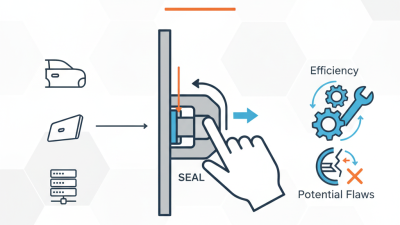
China has become a major sourcing destination for reliable Latch Snap products. Its manufacturers serve apparel, bags, footwear, outdoor gear, marine covers, and industrial accessories. Buyers can find brass, stainless steel, zinc alloy, and reinforced plastic options. Each material creates a different balance of strength, corrosion resistance, cost, and appearance.
“Small fastening parts often decide the durability of the finished product,” says Michael R. Hansen, a fastening systems consultant with more than two decades of manufacturing experience. His observation is practical. A Latch Snap may look simple, yet spring tension, plating thickness, hole alignment, and closing force can affect daily performance. Buyers should inspect samples under repeated opening and closing. A polished surface alone proves little.
This guide introduces China’s top Latch Snap manufacturers for global buyers. It considers production capability, customization, quality controls, export experience, and communication standards. Factory photographs can help, but they cannot replace inspection records or physical samples. Ask about material certificates, salt-spray testing, dimensional tolerances, and packaging protection. These details matter when products travel through humid warehouses or crowded containers.
The shortlist is not perfect. Supplier rankings can change with capacity, staffing, and quality performance. That is worth remembering. A large factory may not suit a small order, while a smaller specialist may provide better technical attention. Buyers should compare evidence, not impressive claims. Clear drawings, documented approvals, responsive communication, and realistic lead times offer stronger guidance. The right partner should protect both product function and brand reputation.
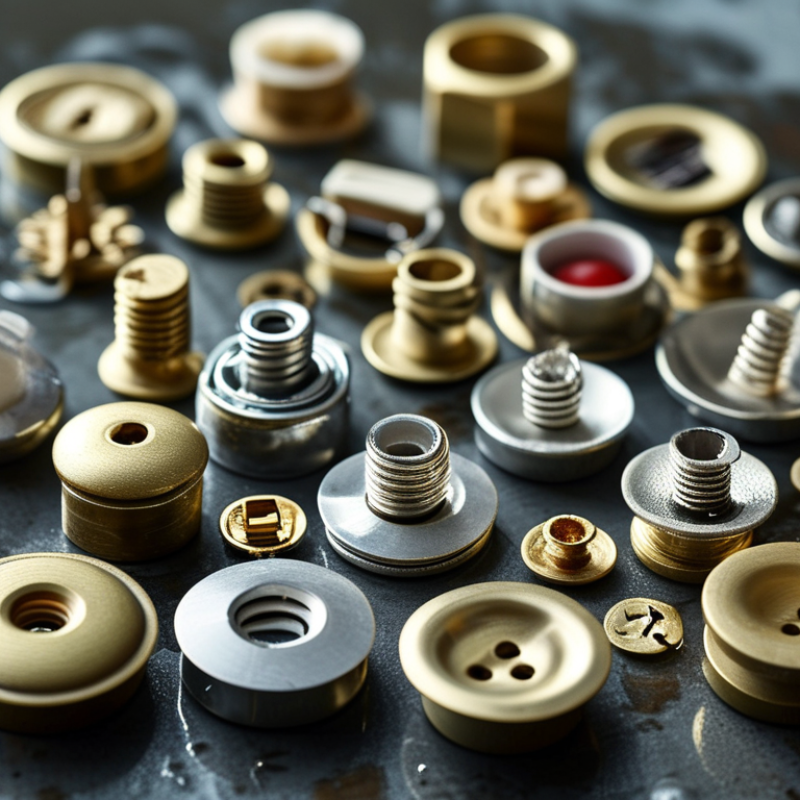
Chinese factories produce several latch snap types for apparel, bags, footwear, and light industrial goods. Common options include ring snaps, prong snaps, glove snaps, cap snaps, and heavy-duty press studs. Some suppliers also make swivel snap hooks with spring-loaded latches. Terminology can vary between factories, so buyers should confirm drawings and samples.
The global fasteners market was valued at about USD 95 billion in 2023, according to Grand View Research’s Fasteners Market report. This growth supports wider material choices from Chinese manufacturers. Brass offers a warm appearance and good corrosion resistance. Stainless steel suits outdoor products and repeated washing. Zinc alloy supports detailed shapes, but coating quality needs close inspection. Plastic snaps reduce weight and may suit children’s garments or technical textiles.
Small details matter.
Tips: Request salt-spray results, pull-off strength, plating thickness, and cycle-test records. Ask whether testing followed ISO 9227 or an equivalent method. Confirm the base metal, coating, spring material, and operating temperature. A factory sample can look excellent while hidden burrs damage fabric during use. I have seen buyers approve color first and discover weak springs later. That mistake is avoidable, though not every report reveals production variation. The World Trade Organization’s 2023 World Trade Statistical Review also shows manufactured goods remain central to global trade, making traceable quality records increasingly valuable for international buyers.

For global buyers, a latch snap must do more than close a panel. It must hold reliably through vibration, moisture, repeated handling, and temperature changes.
In field inspections, the first clues are practical:
Small defects become expensive when operators wear gloves or work near moving equipment. A satisfying click is useful, but it is not proof of strength.
Stainless steel 304 suits general indoor and outdoor service, while 316 offers stronger resistance in coastal or chloride-rich environments. Zinc-plated carbon steel can reduce cost, but coating thickness and edge coverage need verification.
Nylon or acetal inserts may lower noise and prevent surface damage. Material certificates should identify the grade, batch number, and applicable test results.
“Rust resistant” alone is too vague.
Reliable sourcing depends on more than a test report. Process control should cover stamping, forming, heat treatment, plating, assembly, and final inspection.
Sampling plans based on ISO 2859-1 can help, although critical applications may require tighter controls. Check packaging too; damp cartons can damage parts before installation.
A common mistake is selecting by price and overlooking spring fatigue or mismatched hardware. I have seen attractive samples fail after repeated cycling.
That lesson still deserves attention. Ask for traceability, inspection photographs, and independent verification when operational risk is significant.
When comparing China’s top latch snap manufacturers, global buyers should inspect more than catalog photos and quoted prices. A reliable supplier should explain alloy grade, plating thickness, spring material, mold ownership, and production tolerances. Ask for dimensional drawings and a pre-production sample. Measure the snap with calipers, then test its opening force and return action.
The ISO Survey 2022 recorded 426,716 ISO 9001 certificates in China. Certification supports process control, but it does not guarantee consistent latch snap quality. Request recent inspection records, batch traceability, and corrective-action reports. For metal hardware, check burrs, uneven plating, loose springs, and visible cracks. A simple salt-spray test can expose weak corrosion protection. Test samples after repeated opening cycles, not only once.
The World Bank’s Logistics Performance Index 2023 placed China 19th globally, with a score of 3.7. This suggests strong export infrastructure, yet factory communication still needs checking. Confirm packaging standards, carton labels, lead times, and replacement procedures in writing. Visit the production line when possible. Watch how workers sort defective parts. A polished sample can still hide weak springs. I would also compare three suppliers using the same test method, because the cheapest quotation often leaves quality risks unclear. Ask uncomfortable questions early. They save time later.
Practical comparison framework using commonly accepted purchasing benchmarks for metal latch snaps, snap fasteners, and related hardware. Actual performance depends on design, material, tooling, finish, and application requirements.
| Evaluation Dimension | Typical Industry Benchmark | What Global Buyers Should Evaluate | Recommended Evidence |
|---|---|---|---|
| Material Options | Brass, stainless steel, carbon steel, zinc alloy, or aluminum | Confirm whether the manufacturer can supply the required base metal and maintain consistent material thickness across production batches. | Material certificate, alloy designation, thickness report, and approved sample |
| Corrosion Resistance | Performance varies by substrate and plating; salt-spray testing is commonly used for coated hardware | Match the finish to the end use, such as apparel, bags, footwear, outdoor goods, marine environments, or industrial products. | Salt-spray report, coating specification, plating thickness, and finish-control samples |
| Load and Pull-Off Strength | Must be established according to the product design and application; no universal value applies to every latch snap | Request test results for pull force, shear force, repeated opening and closing, and deformation after use. | Internal test method, test fixture details, force results, and third-party validation when required |
| Dimensional Accuracy | Critical dimensions should follow approved drawings and agreed tolerances | Check cap diameter, socket and stud fit, post length, hole size, thickness, and alignment against production drawings. | 2D or 3D drawings, inspection report, calibrated measurement records, and first-article sample |
| Finish and Color Consistency | Common finishes include nickel, antique, brass, gunmetal, black, matte, and polished surfaces | Assess color consistency, gloss level, edge smoothness, burr control, scratches, stains, and plating adhesion. | Approved color standard, surface inspection checklist, adhesion test, and batch comparison photos |
| Customization Capability | Custom dies, logos, shapes, finishes, packaging, and assembly configurations are commonly available | Determine whether the supplier controls tooling, protects design files, and can reproduce the approved custom appearance at scale. | Tooling quotation, sample approval process, confidentiality agreement, and production capability review |
| Minimum Order Quantity | Varies substantially according to stock status, material, finish, packaging, and custom tooling | Compare the minimum order for standard items with the minimum order for customized parts. Confirm whether mixed colors or sizes are permitted. | Written quotation showing MOQ by specification, color, finish, and packaging method |
| Sample and Tooling Lead Time | Standard samples are often faster than custom samples requiring new dies or plating trials | Separate sample approval time, tooling time, pilot production time, and mass-production lead time before placing an order. | Milestone schedule, tooling completion date, sample dispatch date, and production plan |
| Production Capacity | Capacity depends on stamping, casting, machining, polishing, plating, assembly, and inspection resources | Verify whether key processes are performed in-house or outsourced and whether capacity can support peak-season demand. | Factory audit, equipment list, monthly capacity statement, process flow, and subcontractor controls |
| Quality Management | Documented incoming, in-process, final, and pre-shipment inspections are preferred | Evaluate inspection frequency, sampling standards, defect classification, corrective-action procedures, and traceability. | Quality manual, inspection records, corrective-action reports, and batch traceability documents |
| Compliance Documentation | Requirements depend on destination market and product application | Check applicable chemical, product-safety, packaging, and restricted-substance requirements before production. | Relevant declarations, material disclosures, laboratory reports, and compliance test results |
| Packaging and Export Handling | Bulk bags, cartons, trays, barcode labels, and customized export packaging are commonly used | Ensure packaging prevents scratching, tangling, moisture damage, mixed specifications, and count discrepancies during transport. | Packaging specification, carton dimensions, packing photos, weight records, and shipping marks |
| Communication and Technical Support | Clear technical communication is essential for custom hardware projects | Assess response speed, drawing interpretation, ability to identify design risks, English documentation, and change-control discipline. | Technical quotation, drawing review comments, meeting records, and engineering change procedure |
| Commercial Reliability | Supplier risk is lower when specifications, payment terms, warranty terms, and delivery commitments are documented | Compare total landed cost rather than unit price alone, including tooling, inspection, packaging, freight, duties, and replacement policy. | Formal quotation, sales contract, warranty terms, payment details, and reference checks |
| Overall Selection Score | Recommended scoring: 1–5 points per dimension | Prioritize measurable quality, repeatability, compliance, delivery reliability, and total cost. Do not select a supplier on price alone. | Completed supplier scorecard supported by documents, samples, audits, and test results |
Note: The benchmarks above are general procurement guidelines, not guarantees for any individual supplier or product. Buyers should approve production samples and define acceptance criteria before mass production.
China-based latch snap manufacturers serving global buyers must treat quality control as a documented process, not a final visual check. The 2023 ISO Survey recorded more than 1.2 million ISO 9001 certificates worldwide. This figure shows broad adoption, but certification alone does not prove consistent snap performance. Buyers should request material certificates, batch records, and recent laboratory reports.
Production control begins with incoming metal inspection. Technicians should verify thickness, hardness, plating coverage, and dimensional tolerance. During stamping, samples need checks for burrs, cracks, weak springs, and incomplete closure. A practical control plan may inspect every batch and apply higher sampling after tooling changes. Testing under ISO/IEC 17025-accredited conditions can improve report credibility. Useful tests include pull strength, repeated opening cycles, corrosion resistance, and nickel release where skin contact is expected.
Compliance evidence must match the destination market. Suppliers should maintain declarations for restricted substances and traceable records for coatings, base metals, and packaging. The OECD’s responsible-sourcing guidance also supports risk-based supplier checks, especially when raw materials pass through several tiers. Small defects matter. A snap that closes poorly can damage fabric, injure a user, or trigger costly returns. One weak point remains: some factories measure appearance carefully but under-test fatigue. Buyers should challenge that gap with witnessed inspections, retained samples, and corrective-action records. Mistakes still happen; transparent records make them manageable.
When ordering latch snaps from overseas manufacturers, buyers should specify more than size and finish. Define the base metal, wire diameter, working load, corrosion exposure, and required cycle life. Stainless steel suits humid applications, while coated carbon steel may reduce cost. Request drawings, material certificates, inspection records, and pre-production samples. Small details matter. A two-millimeter tolerance can affect assembly.
Customization should follow a controlled approval process. Confirm hole spacing, spring tension, plating thickness, logo restrictions, packaging, and minimum order quantity in writing. Independent checks can verify dimensions and salt-spray performance. The 2023 World Bank Logistics Performance Index compares 139 economies and stresses supply-chain reliability, not freight price alone. That principle applies to factory selection too. A low quote is not necessarily efficient.
International shipping requires realistic planning. The WTO’s April 2024 Global Trade Outlook projected merchandise trade growth of 2.6% in 2024 and 3.3% in 2025, increasing pressure on transport capacity. UNCTAD’s Review of Maritime Transport 2024 reported maritime trade growth of about 2.4% in 2023. Buyers should compare sea, rail, and air options using total landed cost, not quotation price. Include Incoterms, export documents, customs classification, insurance, carton dimensions, and delivery buffers. I would avoid promising fixed arrival dates. Port congestion, inspections, and weather can still disrupt a careful plan. My own reflection is simple: detailed specifications prevent more problems than urgent negotiation.