Choosing the right Pull Hinges is rarely as simple as comparing prices or polished product photos. Global buyers must examine door weight, opening angle, material, finish, mounting space, and expected usage. A hinge that performs well on a light cabinet door may fail on a heavy glass panel. Small differences matter.
Architectural hardware consultant David G. Smith offers a practical reminder: “The best hinge is not the strongest one, but the one matched to the complete door system.” That principle guides this overview of the Top 10 Types of Pull Hinges for Global Buyers. Each type serves a different installation reality, from compact furniture doors to demanding commercial enclosures.
The guide considers common options such as concealed, surface-mounted, spring-loaded, glass-door, stainless steel, and adjustable Pull Hinges. It also reviews load capacity, corrosion resistance, installation tolerance, and maintenance needs. These details become especially important when products cross climates, suppliers, and building practices.
There is no universal winner.
A buyer in a humid coastal region may prioritize stainless steel, while a furniture manufacturer may value concealed alignment and fast installation. Cost can mislead. A cheaper hinge may require more adjustments, replacement labor, or protective treatment later.
The ranking is useful, but not perfect. Product quality varies between factories, and technical specifications are sometimes incomplete. Buyers should request samples, load data, material grades, and installation drawings before placing large orders. Careful testing remains more reliable than attractive catalog language.
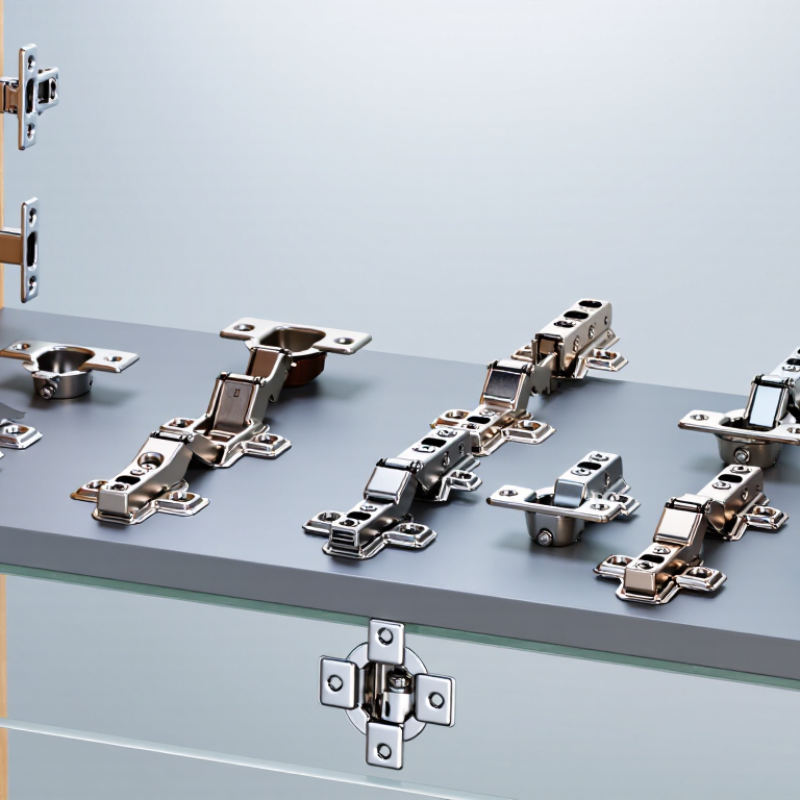
Pull hinges are compact mechanical fittings that let a door, panel, cabinet, or access cover open around a fixed axis. Unlike ordinary butt hinges, they are often designed to be pulled from a visible edge or recessed handle area. A hinge leaf attaches to the frame, while another leaf connects to the moving panel. A pin or knuckle carries the load and controls rotation.
Their operation is simple, but selection is not. When users pull a panel, the hinge transfers force into the screws, mounting plate, and frame. Concealed, surface-mounted, offset, spring-loaded, friction, torque, continuous, lift-off, adjustable, and heavy-duty versions serve different applications. A spring hinge can close a light door automatically. A friction hinge holds a display panel at an angle. A lift-off hinge permits quick panel removal. Small details matter.
Grand View Research estimated the global hinges market at about USD 4.6 billion in 2023, with continued growth through 2030. MarketsandMarkets also identifies construction, furniture, and industrial equipment as major demand areas. These figures cover broader hinge categories, not pull hinges alone. That limitation deserves attention. In practical sourcing, load rating, cycle testing, corrosion resistance, pin tolerance, and installation clearance often matter more than appearance. A hinge may feel strong in a sample but loosen after repeated pulling. Test it under real weight, vibration, and temperature changes before approving a global shipment.

Top 10 Types of Pull Hinges for Global Buyers?
How Pull Hinges Are Classified by Design and Movement
Pull hinges are best compared by structure and movement, not appearance alone. In sourcing inspections, I usually separate them into ten practical types: concealed, surface-mounted, offset, strap, T-shaped, parliament, continuous, spring-loaded, lift-off, and adjustable-friction hinges. Each design changes installation space, load direction, and door clearance. A concealed hinge leaves a clean face, while a strap hinge visibly distributes force across a wider area. Surface-mounted models simplify replacement. Offset and parliament designs help doors clear thick frames or nearby walls.
Movement creates another useful classification. Continuous hinges support movement along the full door height. Lift-off hinges allow quick panel removal. Spring-loaded hinges automatically return the door, but their closing force must match the panel weight. Adjustable-friction hinges hold a position through controlled resistance. T-shaped hinges handle basic outward movement, while concealed and offset models often depend on carefully set pivot lines. Movement matters.
A global buyer should check opening angle, mounting holes, material thickness, and cycle testing. A hinge that works on a light cabinet may fail on a metal access panel. Measure twice. Also review corrosion resistance for humid warehouses and coastal installations. One imperfect assumption is common: more steel does not always mean better performance. Poor alignment can create noise, binding, and uneven wear. Samples should be tested with the real door, fasteners, and frame before a larger order. Even then, field conditions may expose weaknesses that laboratory tests miss.
Top 10 Types of Pull Hinges for Global Buyers
Pull hinges support controlled movement in cabinets, access panels, doors, and industrial enclosures. The main choices include butt pull hinges, continuous piano hinges, concealed pull hinges, overlay pull hinges, inset pull hinges, pivot pull hinges, spring pull hinges, self-closing pull hinges, soft-close pull hinges, and lift-off pull hinges. Each type creates a different balance between access, appearance, load support, and installation speed.
But no type fits every project. Butt hinges suit general doors, while piano hinges spread force along a longer edge. Concealed hinges provide a clean exterior, yet they usually demand accurate drilling. Pivot hinges work well for heavy or wide doors. Spring and self-closing versions help control movement, but their tension must match the door weight. Soft-close models reduce impact and noise. Lift-off hinges simplify maintenance.
Global buyers should check load capacity, opening angle, material grade, surface treatment, screw pattern, and sample measurements. Stainless steel can suit humid environments, while zinc-coated steel may support cost-sensitive indoor projects. Packaging also matters. Small parts can disappear during long-distance shipping. A practical mistake is choosing by appearance alone. I have seen specifications miss the real installation space. Ask for drawings, tolerance data, and test samples before placing a large order. Five millimeters can change everything.
Top 10 Types of Pull Hinges for Global Buyers?
Pull hinges include surface-mount, concealed, spring-loaded, friction, torque, piano, strap, lift-off, stainless-steel, and aluminum models. Each type changes installation time and load behavior. Stainless steel suits humid kitchens, outdoor cabinets, and marine-adjacent environments. Aluminum reduces weight but may deform under repeated side loading. Zinc alloy offers economical appearance, yet its strength varies widely.
Choose sizes by leaf length, knuckle diameter, screw spacing, and door thickness. A 50–75 mm hinge may fit a light access panel, while larger leaves support heavier doors. Never trust size alone. Load ratings should include door weight, width, opening angle, and cycle frequency. ANSI/BHMA A156.9 provides cabinet-hardware performance testing, but it does not create one universal load rating. Grand View Research’s 2024 cabinet-hardware analysis identifies stainless steel and aluminum as important material segments. That supports material comparison, not automatic product approval.
Tips: Ask for tested working loads, cycle data, corrosion results, and screw recommendations. ISO 9227 salt-spray testing can reveal corrosion resistance, but test hours do not equal real service life. I once selected a compact hinge by weight alone. The door sagged after frequent opening. That mistake still matters. Leave clearance around the knuckle, pre-drill hardwood, and test the hinge with the actual door before bulk purchasing. Inconsistent mounting surfaces can reduce performance more than a small load difference.
| No. | Pull Hinge Type | Common Materials | Typical Size Range | Typical Load Capacity | Typical Applications | Installation Features | Key Buying Considerations |
|---|---|---|---|---|---|---|---|
| 1 | Surface-Mount Pull Hinge | Stainless steel, zinc-plated steel, aluminum | 40–100 mm leaf length; 1.5–4 mm thickness | 30–120 kg per pair | Metal cabinets, access panels, equipment enclosures | External mounting; screw, bolt, or rivet installation; no door recess required | Check mounting clearance, corrosion resistance, and hole spacing |
| 2 | Concealed Pull Hinge | Zinc alloy, stainless steel, carbon steel | 50–120 mm overall length; 2–5 mm leaf thickness | 40–150 kg per pair | Furniture doors, electrical cabinets, clean-looking architectural panels | Installed inside the door and frame; requires accurate recesses or prepared pockets | Confirm door gap, opening angle, recess depth, and adjustment range |
| 3 | Lift-Off Pull Hinge | Stainless steel, brass, zinc-plated steel | 50–150 mm leaf length; 2–6 mm thickness | 40–180 kg per pair | Removable machine guards, service doors, inspection covers | Door can be lifted vertically off the hinge pins; fast maintenance access | Verify lift direction, pin engagement, side clearance, and anti-lift requirements |
| 4 | Weld-On Pull Hinge | Mild steel, stainless steel | 50–200 mm length; 4–10 mm material thickness | 100–500 kg per pair | Steel gates, trailers, heavy frames, industrial doors | Permanent welding to frame and door; high structural strength when correctly welded | Consider welding procedure, heat distortion, alignment, coating, and field repairability |
| 5 | Adjustable Pull Hinge | Stainless steel, zinc-plated steel, aluminum | 60–160 mm length; 2–8 mm thickness | 50–250 kg per pair | Doors requiring leveling, heavy cabinets, outdoor enclosures | Slotted holes, eccentric pins, or threaded adjustment for alignment correction | Check adjustment range, locking method, fastener access, and load after adjustment |
| 6 | Spring-Loaded Pull Hinge | Stainless steel, carbon steel, engineering polymer components | 50–130 mm length; 2–5 mm thickness | 25–120 kg per pair | Small access doors, gates, utility enclosures, self-closing panels | Integrated spring provides closing or return force; surface or semi-concealed mounting | Match spring torque to door weight and account for fatigue over repeated cycles |
| 7 | Friction Pull Hinge | Stainless steel, aluminum, brass | 40–120 mm length; 1.5–4 mm thickness | 10–80 kg per pair | Instrument panels, display cases, small covers, electronic equipment | Built-in friction holds the panel at selected positions; usually screw-mounted | Evaluate holding torque, cycle life, opening angle, and resistance to vibration |
| 8 | Heavy-Duty Strap Pull Hinge | Carbon steel, stainless steel, ductile iron | 100–300 mm strap length; 5–12 mm thickness | 200–1,000 kg per pair | Barn-style doors, heavy gates, industrial shutters, large wooden doors | Long leaves distribute load over a broad area; through-bolts or structural screws recommended | Confirm substrate strength, hinge spacing, pin diameter, and corrosion protection |
| 9 | Continuous Piano Pull Hinge | Stainless steel, aluminum, brass, steel | 300–2,000 mm length; 0.8–3 mm thickness | 80–300 kg per metre, depending on profile and mounting | Long cabinet doors, piano lids, equipment covers, access panels | Full-length support reduces localized stress; cut-to-length versions may require deburring | Check hinge length, knuckle diameter, pin retention, cut-edge finish, and fastener spacing |
| 10 | Marine-Grade Pull Hinge | 316 stainless steel, marine-grade aluminum, bronze | 50–150 mm length; 2–8 mm thickness | 50–250 kg per pair | Boats, coastal cabinets, outdoor service panels, wet-area doors | Through-bolting or machine screws; designed for moisture and salt exposure when correctly specified | Specify alloy, passivation or anodizing, galvanic compatibility, and drainage clearance |
Note: Load capacities are typical working ranges for a correctly aligned pair of hinges under static loading. Actual capacity depends on hinge geometry, mounting method, door dimensions, load distribution, operating frequency, and substrate strength.
When comparing the top 10 types of pull hinges, global buyers should examine suppliers beyond catalog photos. A hinge may use stainless steel, zinc alloy, or coated carbon steel. Each material changes strength, corrosion resistance, and price. Ask for drawings, material certificates, load data, and sample measurements. Small differences matter. A two-millimeter offset can affect door alignment.
Supplier evaluation should include manufacturing experience and quality controls. Check inspection records, process capability, and traceability for each batch. Request testing against relevant ISO, ASTM, or regional requirements, rather than accepting vague “international standard” claims. For outdoor applications, discuss salt-spray testing and coating thickness. For repeated use, request cycle-test results under realistic loads. Samples should be tested with your actual panel thickness and fasteners. Paper compliance is not enough.
Compare total cost, not only unit price. Include tooling, minimum order quantities, inspection fees, packaging, freight, import charges, and replacement costs. A cheaper hinge can become expensive after early wear or inconsistent holes. Calculate cost per installed unit and expected service life. Ask how defects are handled and how quickly corrective actions are documented. I have seen buyers overlook packaging until scratched parts reached the assembly line. The quote looked competitive. It was incomplete. Leave room for testing, negotiation, and a second supplier review, because the first comparison may still miss hidden production risks.