Choosing the best Pull Lock in 2026 requires more than comparing prices or polished product photos. A lock that feels solid in a showroom may stick after months of dust, rain, and repeated handling. The right choice depends on the door, cabinet, trailer, drawer, or access panel it must protect.
Bruce Schneier, a respected security technologist, offers a useful reminder: “Security is a process, not a product.” That principle matters when selecting a Pull Lock. Buyers should examine the body material, spring strength, latch movement, corrosion resistance, mounting depth, and key control. A stainless-steel face may suit damp environments, while a zinc-alloy model can offer practical value for lighter indoor use. Check the measurements twice. A few millimeters can cause poor alignment, scraping, or an unreliable release.
Small details matter.
Look for smooth pulling action, firm return tension, and clean engagement with the strike plate. Test the lock while wearing gloves if the product will serve a workshop or outdoor vehicle. Review manufacturer specifications, installation drawings, warranty terms, and independent testing where available. Avoid choosing only by appearance. That mistake remains common.
There is no universal winner. A compact Pull Lock may be ideal for a tool drawer but unsuitable for a heavy service door. Smart features can improve monitoring, yet they also add maintenance needs and failure points. Even experienced buyers can overlook installation conditions. The best decision combines verified specifications, real-world use, and honest attention to limitations.
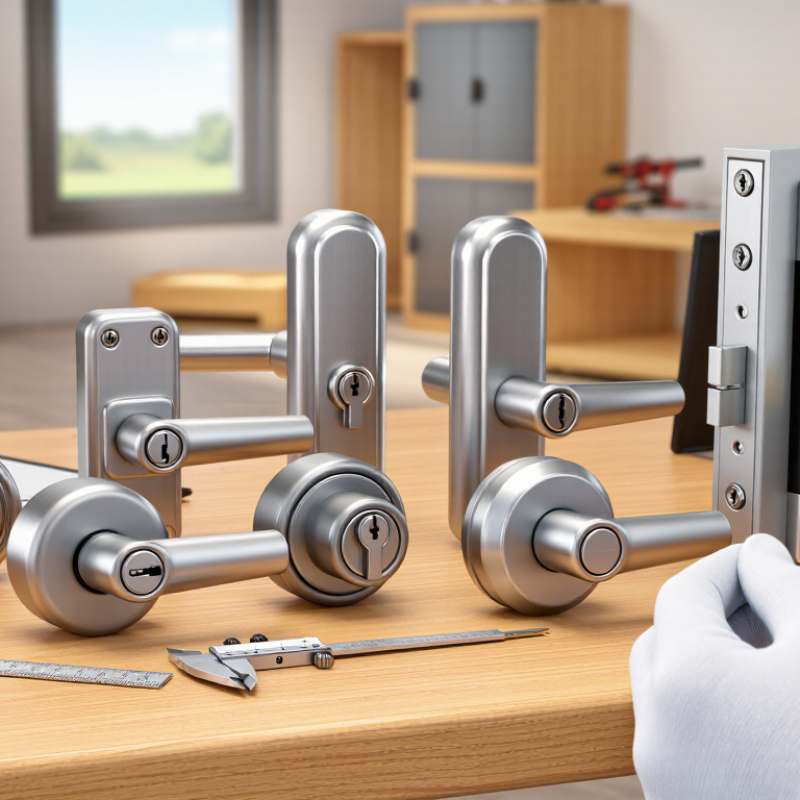
Choosing the best pull lock in 2026 starts with a clear definition of the working environment. Measure the expected load, not only the door or panel weight. A loaded cabinet may pull downward while vibration creates repeated side forces. Check both static and dynamic loads. Then select a lock with a practical safety margin.
Load is only one part of the decision. Exposure can change performance quickly. Outdoor equipment may face rain, salt spray, dust, ultraviolet light, and freezing temperatures. Indoor units still encounter cleaning chemicals and humid air. Look for suitable corrosion protection and verify the lock’s operating range. A smooth latch during installation may become stiff after months of contamination. That detail is easy to miss.
Security requirements should match the real risk. A service cabinet may need controlled access and strong resistance to prying. A storage drawer may need basic prevention against accidental opening. Consider the locking mechanism, handle strength, mounting hardware, and key control together. The lock is not secure if the surrounding panel bends first. Frequent access also matters; operators need consistent engagement without excessive force. Test several cycles under realistic conditions. In one installation review, the chosen lock met its rated load but failed after misalignment developed. The specification was correct, yet the installation was not. That uncomfortable lesson deserves attention. Allow adjustment, inspect fasteners, and record test results before approving the final design.

When choosing a pull lock in 2026, separate endurance from attack resistance. For common bored locksets, ANSI/BHMA A156.2 assigns Grade 1 to 800,000 cycles, Grade 2 to 400,000, and Grade 3 to 200,000 cycles. These figures measure operational durability, not every security threat. A busy entrance may justify Grade 1. A private interior door may not need it. A grade label alone can mislead.
UL 437 addresses a different question. Its criteria evaluate key-locking mechanisms against specified attack methods, including picking, drilling, sawing, prying, and wrenching. UL 437 does not replace ANSI/BHMA grading. It also does not promise absolute protection. The FBI’s 2023 Crime Data Explorer recorded approximately 848,000 burglary offenses nationwide, showing why resistance testing deserves attention. Still, statistics cannot predict the risk at one property. In field inspections, weak mounting surfaces often undermine a strong cylinder. That detail is easy to miss.
Tips: Check the exact standard listed on the certificate. Confirm whether the pull lock is tested as a complete assembly. Match Grade 1, 2, or 3 with traffic levels and door construction. For higher-risk locations, seek UL 437 evaluation and controlled key access. Ask for test documentation, not only a product label. Installation matters. A certified lock installed into thin material may perform poorly. I would also review maintenance records, because worn keys and loose fasteners quietly reduce real-world security.
Choosing the best pull lock in 2026 starts with its body material, not its appearance. A polished surface can mislead.
For outdoor equipment, compare stainless steel, plated steel, and aluminum carefully. Stainless steel usually offers stronger corrosion resistance, but its grade still matters. Aluminum is lighter, yet softer under repeated impact. Plated steel may perform well when the coating remains intact. Inspect edges, seams, and the keyway, where moisture often hides. NACE International’s IMPACT study estimated global corrosion costs at 2.5 trillion dollars annually, equal to about 3.4% of global GDP. That figure makes material verification more than a purchasing detail.
Shackle clearance also affects real security and durability. Measure the gap around the latch, hasp, and mounting plate. Leave enough room for movement, but not enough for prying tools. Test the lock with gloves and slight misalignment. Small errors appear quickly. I have found that a lock fitting perfectly on a clean sample may bind after dust, paint, or temperature changes.
Check the stated corrosion rating against the installation environment. ISO 9223 classifies atmospheric corrosivity, while ISO 12944 describes coating protection and durability expectations. Ask whether test results used salt spray, cyclic exposure, or field inspection. ASTM B117 data can compare coatings, but it does not perfectly predict outdoor service life. A higher rating is useful, not magical. Drainage, galvanic contact, and maintenance still matter. Supplier test reports should identify the material grade, coating thickness, exposure method, and inspection criteria. Without those details, the claim remains incomplete.
How to Choose the Best Pull Lock in 2026?
Check Fit, Mounting Dimensions, and Required Installation Torque
Choosing the best pull lock in 2026 starts with fit, not appearance. Measure the door thickness, cutout size, frame clearance, and latch reach. A lock may look suitable but still fail when the keeper sits several millimeters off center. Measure twice. Also check whether the pull handle clears nearby seals, panels, or moving parts. Small clearances can become serious problems during daily use.
Mounting dimensions deserve careful attention. Confirm the hole pattern, fastener diameter, backplate size, and available installation depth. Compare these measurements with the actual panel, rather than relying only on a product drawing. Drawings can omit washers, gaskets, or required spacing. I have seen installations fail because a rear screw touched an internal bracket. That mistake was avoidable.
Torque matters. Use the installation instructions and a calibrated torque wrench when tightening fasteners. Too little torque can allow movement, vibration, or loosening. Too much torque may deform the panel or damage the lock body. Apply torque gradually and inspect the latch after installation. The pull should operate smoothly without scraping or excessive force. A simple opening test is useful, but it does not replace repeated cycle testing. My own process still needs improvement when tolerances are tight, so I record measurements and recheck them before final approval.
| Pull Lock Type | Typical Application | Recommended Panel Thickness | Typical Cutout / Mounting Dimensions | Overall Body Length | Adjustable Grip Range | Mounting Method | Recommended Installation Torque | Typical Holding Load | Best Selection Check |
|---|---|---|---|---|---|---|---|---|---|
| Surface-Mount Pull Lock | Electrical cabinets, access panels, equipment covers | 1.0–3.0 mm | Mounting hole spacing: 35–60 mm; no large cutout required | 55–95 mm | 10–25 mm | Two screws or bolts through the panel | 1.5–3.0 N·m | 300–800 N | Choose when external access and simple retrofit installation are priorities |
| Flush-Mount Pull Lock | Machine guards, transport cases, furniture and interior panels | 0.8–2.5 mm | Rectangular cutout: approximately 70 × 45 mm; corner radius commonly 3–6 mm | 70–110 mm | 8–20 mm | Rear studs, rivet nuts or captive nuts | 1.0–2.5 N·m | 250–700 N | Confirm the cutout template, flange clearance and rear access before ordering |
| Compression Pull Lock | Doors requiring vibration resistance, dust reduction or gasket compression | 1.0–4.0 mm | Round or rectangular cutout; common mounting diameter: 22–30 mm | 65–120 mm | 3–8 mm compression adjustment | Threaded body with retaining nut or mounting screws | 2.0–4.0 N·m | 500–1,200 N | Match the compression range to the gasket thickness and required sealing force |
| Heavy-Duty Draw Pull Lock | Industrial enclosures, battery boxes, vehicle bodies and large access doors | 1.5–5.0 mm | Mounting hole spacing: 50–100 mm; keeper alignment tolerance: typically ±2 mm | 90–160 mm | 15–40 mm | Bolted body and separate adjustable keeper | 3.0–7.0 N·m | 1,000–3,000 N | Verify the working load, safety factor, keeper position and door deflection |
| Recessed Pull Lock with Key | Secure cabinets, tool storage, service compartments and public-access panels | 1.0–3.0 mm | Rectangular cutout: approximately 75 × 50 mm; typical depth: 25–40 mm | 75–125 mm | 8–25 mm | Rear screws, studs or retaining clips | 1.0–2.5 N·m | 300–900 N | Check key rotation clearance, cylinder depth and lock-to-keeper alignment |
| Corrosion-Resistant Pull Lock | Outdoor cabinets, marine equipment, washdown areas and humid environments | 1.0–4.0 mm | Use the selected model’s template; common hole spacing: 40–80 mm | 60–130 mm | 10–30 mm | Through-bolts with corrosion-resistant washers and locknuts | 1.5–4.0 N·m | 400–1,200 N | Confirm material compatibility, drainage, surface finish and galvanic-corrosion risk |
A pull lock should be judged by service life, not its first invoice. Ask for tested operating cycles, corrosion results, and temperature limits. A lock used on a delivery cabinet may face dust, vibration, and hundreds of pulls weekly. A laboratory cycle number helps, but it does not perfectly predict field performance. Installation quality still matters.
Warranty terms need close reading. Check the coverage period, replacement process, labor limits, and exclusions for corrosion or misuse. A three-year warranty may offer less value than a shorter warranty with clear response times. The U.S. Department of Energy’s Operations & Maintenance Best Practices Guide reports that preventive maintenance can reduce costs by 12–18% compared with reactive maintenance. For pull locks, simple inspection and lubrication can prevent expensive failures. However, lubrication is not suitable for every material or environment.
Tips: Build a five-year cost sheet. Include purchase price, installation, spare units, inspections, downtime, and disposal. NIST Handbook 135 recommends life-cycle costing with present-value calculations, not simple price comparisons. Add the warranty’s real financial value only when claim conditions are practical. Keep records of cycle counts and failures. That evidence improves future purchasing decisions. A cheap lock can become costly after repeated service calls. An expensive model can also disappoint when its cycle rating ignores real contamination. Test one sample in actual conditions before ordering in volume.