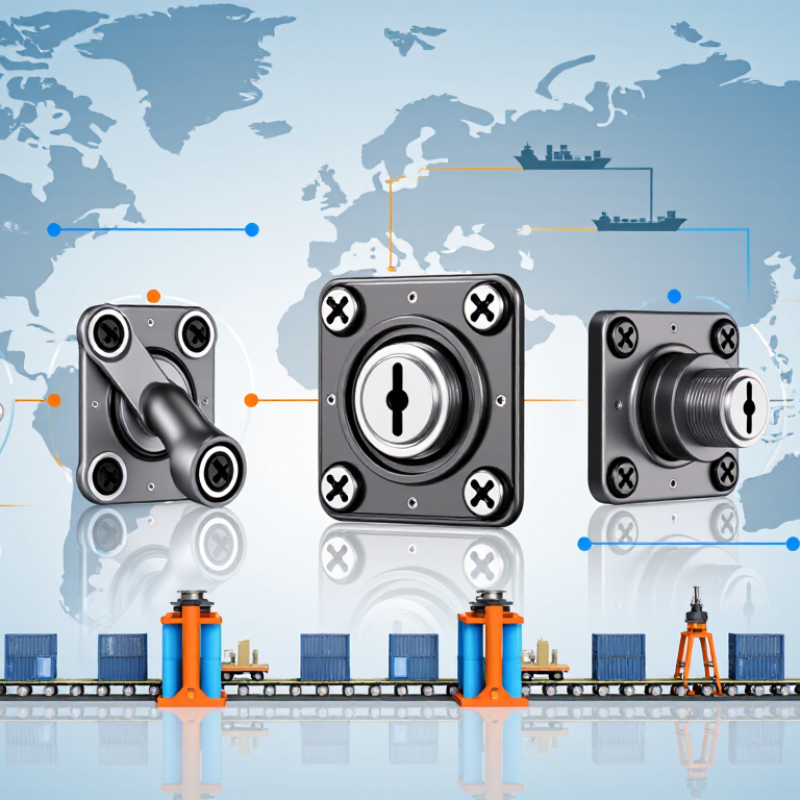
Global logistics is becoming more demanding, and small hardware failures can create expensive delays. UNCTAD’s Review of Maritime Transport 2024 reported that global maritime trade grew by about 2.4% in 2023. Container shipping remains central to this movement. Reliable Turn Lock components therefore support safer container handling, trailer securing, and modular transport operations.
Quality matters at the connection point. A poorly machined locking head may resist rotation, while weak welds can produce visible cracking around the base. These details are easy to overlook during a factory visit. They should not be.
This guide examines China’s top 10 Turn Lock manufacturers for global buyers. The selection considers production experience, material traceability, machining accuracy, load-testing procedures, export capability, and customization support. ISO 1161 container corner fittings provide an important technical reference, although a fitting standard does not automatically prove complete product quality. Buyers should still request inspection records, coating specifications, dimensional reports, and sample approval.
The World Bank’s Logistics Performance Index 2023 highlights infrastructure quality, shipment reliability, and logistics competence as major supply-chain factors. These criteria also matter when choosing a hardware supplier. A low quotation can lose its advantage through rework, missed vessel schedules, or inconsistent batches.
Public market reports rarely separate Turn Lock products clearly from broader container hardware categories. That limitation deserves attention. This ranking is therefore not a perfect financial league table. It is a practical starting point for comparing capable Chinese manufacturers, verifying claims, and matching supplier strengths with real project requirements. Look beyond polished catalogs. Ask how the lock performs after repeated use, salt exposure, vibration, and hurried handling.
Turn locks, often called twist locks, secure shipping containers through their corner castings. A rotating head enters the casting and turns into position. Simple movement. Serious responsibility.
UNCTAD’s Review of Maritime Transport reports that over 80% of global merchandise trade by volume moves by sea. That scale makes small locking failures expensive. A dependable manufacturer should control steel chemistry, heat treatment, dimensions, and surface protection. Buyers should request load-test records, material certificates, dimensional inspection reports, and traceable batch numbers. ISO 1161 defines container corner fittings, while ISO 1496 covers container specifications and testing. Compliance should be documented, not merely promised.
The World Bank’s Logistics Performance Index 2023 assessed logistics systems across 139 economies. It highlights infrastructure, tracking, timeliness, and shipment reliability. Turn locks influence several of these areas indirectly. Poorly finished threads, weak welds, or inconsistent rotation can delay handling and increase inspection risks. Experienced buyers should test samples under realistic loads, salt exposure, and repeated locking cycles. Laboratory results help.
But testing one sample is not enough. Manufacturing consistency matters more. A cheaper component may pass an initial check and fail after months of vibration. That possibility deserves attention. Global buyers should compare warranty terms, production capacity, quality-control procedures, and export packaging. Reliable suppliers explain limitations clearly. That honesty is useful. Perfect products do not exist, and even careful procurement teams can overlook corrosion, tolerance changes, or unsuitable operating conditions.
For global buyers, a reliable turn-lock specification should match the enclosure’s environmental requirements. The chart compares representative IP codes used for enclosure hardware under IEC 60529: the first digit indicates protection against solids and dust, while the second digit indicates protection against water. IP ratings are coded levels rather than a linear performance scale, and IPX8 testing conditions should be confirmed with the manufacturer.
Evaluating China’s top 10 turn lock manufacturers requires more than comparing online rankings. Start with the lock’s intended use, material, dimensions, and operating environment. Request production samples, not only catalog photos. Samples reveal more. Check the cam’s alignment, key rotation, surface finish, and resistance to repeated handling. A loose turn or rough edge may indicate weak process control.
Ask each manufacturer for measurable test data. Useful records include cycle testing, salt-spray results, load limits, dimensional tolerances, and inspection procedures. Confirm whether testing occurs in-house or through an independent laboratory. Request material certificates for stainless steel, zinc alloy, or plated components. Numbers can mislead. A strong factory should explain test conditions clearly, including temperature, humidity, cycle count, and failure criteria.
Factory evaluation also depends on traceability and communication. Review quality-control checkpoints from stamping through final assembly. Ask how rejected parts are isolated and how corrective actions are recorded. Verify production capacity against your forecast, especially during seasonal demand. Lead-time promises should include tooling, packaging, inspection, and shipping preparation. Check warranty terms, spare-part support, and response times in writing. An audit can reveal impressive equipment but inconsistent housekeeping. That matters. No manufacturer is perfect, and a low defect rate may still hide packaging damage or unstable subcontracting. Buyers should compare evidence, revisit unclear answers, and test a small batch before approving larger orders.
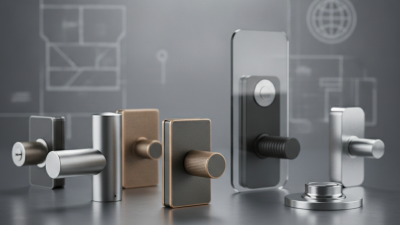
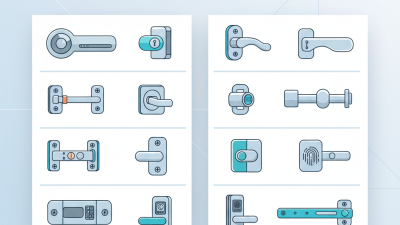
Leading Chinese turn lock manufacturers supply quarter-turn locks for cabinets, server racks, lockers, machinery, and electrical enclosures. Common products include cam locks, compression locks, swing-handle locks, tubular key locks, and electronic versions. According to Grand View Research, the global smart lock market was valued at about USD 2.8 billion in 2023, with strong growth expected through 2030. This trend is increasing demand for mechanical locks with digital access options.
Customization usually starts with the locking cam. Buyers can specify cam length, shape, rotation angle, and locking direction. Keyed-alike systems simplify maintenance across large facilities. Stainless steel suits humid environments, while zinc alloy supports economical indoor applications. Suppliers may also offer IP-rated sealing, dust covers, anti-vibration springs, custom keys, laser engraving, and private packaging. Good factories provide CAD drawings, sample approval, salt-spray testing, and batch inspection records.
Details matter here.
The IEC 60529 standard helps buyers compare enclosure protection through IP ratings. However, an IP rating alone does not prove long-term durability. Installation pressure, vibration, and incorrect cam alignment still cause failures. This is an area where supplier claims deserve careful review. MarketsandMarkets has identified growing connected-device adoption as a major smart-lock driver, but many industrial buyers still prefer simple mechanical turn locks. The best sourcing decision depends on access frequency, security risk, operating temperature, and replacement needs.
China’s top ten turn lock manufacturers should be judged beyond catalog photos. Quality begins with traceable zinc alloy, stainless steel, or reinforced nylon batches. The ISO Survey 2023 recorded more than 1.2 million ISO 9001 certificates worldwide. Still, certification alone cannot prove reliable lock performance. Ask for material reports, salt-spray results, torque testing, and inspection records. For outdoor cabinets, verify IP protection under IEC 60529 and request RoHS and REACH documentation.
Pricing changes sharply with material, cylinder design, finish, packaging, and order volume. In recent sourcing comparisons, basic mechanical turn locks often quote around US$0.80–3.50 each. Higher-security or electronic versions may exceed US$5. These figures are indicative, not a universal market average. A low quote can hide thinner metal, weak springs, or incomplete testing. Request a sample before comparing factory prices. Production capability matters too: review monthly capacity, tooling ownership, automated assembly, defect rates, and lead times. A practical factory should explain how it handles a 100-piece trial and a 100,000-piece order.
Tips: Put the same specification into every RFQ. Include key removal options, panel thickness, cam dimensions, finish, packing, and inspection standards. Request a first-article report with photographs. It saves arguments later. Buyers sometimes overvalue certificates and undervalue process control. That is a mistake worth revisiting. Verify whether certificates match the legal manufacturer, production site, and current audit period. A video tour helps, but an independent pre-shipment inspection remains stronger evidence.
China Top 10 Turn Lock Manufacturers for Global Buyers
Selecting a turn lock manufacturer requires more than comparing factory prices. Global buyers should verify material grades, load ratings, corrosion resistance, and production controls. For container-related fittings, ISO 1161 defines corner fitting requirements, while ISO 3874 covers handling and securing practices. These standards provide a practical technical baseline.
Supply reliability also matters. UNCTAD reports that maritime shipping carries over 80% of global merchandise trade, so small hardware delays can disrupt larger projects. The World Bank’s 2023 Logistics Performance Index evaluated 139 economies and highlighted customs, infrastructure, shipment reliability, and delivery timeliness. Buyers should therefore request production lead times, packaging details, inspection records, and backup shipping plans. A factory audit can reveal more than a polished catalog. Still, one audit is not enough. Conditions may change after the purchase order.
Tips: Ask for recent test reports, batch traceability, and samples from regular production. Compare at least three quotations using the same specifications. Check whether the supplier can support your destination’s standards and documentation needs. Clarify tooling ownership, replacement parts, tolerances, and warranty terms before payment. A low unit price may hide higher inspection, freight, or failure costs. Keep written approval records for drawings and samples.
When reviewing a China top ten list, treat ranking as a starting point, not proof of suitability. Evaluate factory experience with similar applications, engineering response speed, export history, and corrective-action quality. An imperfect selection process is still better when every assumption is documented and tested.
| Rank | Anonymous Manufacturer Profile | Typical Product Focus | Common Materials and Finishes | Relevant Technical and Compliance Documents | Customization Capability | Typical Commercial Range | Key Buyer Verification Points |
|---|---|---|---|---|---|---|---|
| 1 | Profile A Precision cabinet turn-lock specialist |
Quarter-turn locks for electrical cabinets, control panels, server enclosures and industrial boxes. | Zinc alloy Stainless steel Nickel plating Black coating | Product drawings should define panel thickness, cam rotation, operating torque and ingress-protection requirements. Request RoHS and REACH declarations where applicable. IEC 60529 testing is relevant when an IP-rated enclosure is required. | Cam shape, key or tool operation, rotation angle, sealing washer, mounting nut, logo-free packaging and installation direction. | Suitable for repeated OEM orders. MOQ, tooling cost and lead time must be confirmed against the exact configuration. | Check dimensional samples, torque results, corrosion-test method, gasket compression, cam strength and compatibility with the buyer’s enclosure. |
| 2 | Profile B Furniture and cabinet hardware manufacturer |
Turn locks for office furniture, storage cabinets, lockers, drawers and metal cupboards. | Zinc alloy Steel Brass Chrome finish | Confirm material composition, coating specifications and chemical compliance. For furniture projects, request cycle-test data and corrosion-test reports defined by the purchaser or applicable contract standard. | Keyed-alike or keyed-different options, cam length, cylinder length, handle style, finish, packaging and private-label-free documentation. | Often appropriate for medium-volume furniture programs. Compare piece price together with keys, cams, accessories and packaging. | Verify key operation, duplicate-key control, lock spacing, mounting-hole dimensions, coating adhesion and the number of operating cycles. |
| 3 | Profile C Outdoor enclosure lock manufacturer |
Quarter-turn and compression-style locks for outdoor electrical cabinets, telecom boxes and utility enclosures. | 304 stainless steel 316 stainless steel Zinc alloy EPDM seals | IEC 60529 may be used to classify enclosure ingress protection. Request salt-spray test conditions, material certificates and RoHS or REACH documentation where applicable. | Compression distance, sealing system, handle type, anti-vibration features, cam geometry and lockable or non-lockable operation. | Total cost is influenced by stainless-steel grade, sealing design, surface treatment and environmental testing. | Confirm IP test configuration, seal material, salt-spray duration, temperature range, vibration resistance and resistance to galvanic corrosion. |
| 4 | Profile D High-volume die-casting supplier |
Standard zinc-alloy turn locks for cabinets, vending equipment, display cases and general industrial equipment. | Zinc alloy die casting Steel cam Electroplated finish Powder coating | Request the alloy designation, coating specification, dimensional inspection plan and compliance declarations. ISO 9001 certification can support process control but does not replace product testing. | New die-cast housing, modified cam, customized key profile and high-volume automated assembly. | Usually competitive for stable, high-volume orders. Include mold amortization, sampling, inspection and defect-replacement terms in the quotation. | Review casting porosity control, burr removal, plating adhesion, dimensional capability, key interchangeability and production capacity. |
| 5 | Profile E Stainless-steel hardware specialist |
Corrosion-resistant turn locks for marine equipment, food-processing areas, chemical environments and coastal installations. | 304 stainless steel 316 stainless steel Passivated surfaces Silicone seals | Confirm whether the product uses 304 or 316 stainless steel and request material certificates. Salt-spray or cyclic-corrosion testing should be specified by method and exposure time. | Stainless-steel grade, cam thickness, seal design, fastener type, surface finish and special corrosion-resistance requirements. | Higher material cost is normal for 316 stainless steel and precision passivation. Compare lifecycle value rather than unit price alone. | Check alloy certificates, passivation records, burr-free edges, thread quality, corrosion results and compatibility with cleaning chemicals. |
| 6 | Profile F Electronic and electromechanical lock integrator |
Mechanical turn locks combined with access-control modules, sensors, solenoids or electronic cabinet monitoring. | Zinc alloy Stainless steel Engineering plastics Copper conductors | Electrical safety, EMC, radio and cybersecurity requirements depend on the integrated system and destination market. Request applicable test reports rather than assuming that a mechanical lock certification covers the electronic assembly. | Sensor position, connector type, voltage, wiring length, communication interface, alarm output and mechanical override. | Requires system-level quotation, sample integration and software or firmware validation where electronics are included. | Confirm voltage tolerance, standby current, fail-safe or fail-secure behavior, emergency override, EMC documentation and environmental ratings. |
| 7 | Profile G Vending and payment-equipment lock supplier |
High-use turn locks for vending machines, coin-operated equipment, kiosks and unattended retail cabinets. | Zinc alloy Hardened steel Brass components Protective plating | Specify cycle-life requirements, key-control requirements and applicable anti-tamper design criteria. Security performance should be tested against the buyer’s defined threat model. | Restricted key systems, cam profile, anti-drill components, mounting arrangement, weather protection and tamper-evident packaging. | Important cost items include key management, security features, replacement-key policy and field-service requirements. | Test forced-rotation resistance, drilling resistance, key retention, cycle life, service-key control and replacement-part availability. |
| 8 | Profile H Automotive and transport equipment hardware supplier |
Turn-lock mechanisms for vehicle compartments, trailers, buses, rail equipment and mobile service units. | Stamped steel Stainless steel Zinc alloy Automotive-grade seals | Vibration, shock, temperature, corrosion and weathering tests must be defined for the vehicle application. Any automotive or transport approval is application-specific and should be verified from original test documentation. | Vibration-resistant fastening, compression adjustment, latch interface, seal design, operating handle and installation tooling. | Initial validation may require engineering samples, fixture development and environmental testing before serial production. | Validate vibration endurance, temperature cycling, water and dust exposure, opening force, fastener retention and emergency access. |
| 9 | Profile I Small-batch prototyping and CNC manufacturer |
Low-volume or custom turn locks for product development, laboratory equipment, special machinery and replacement parts. | CNC aluminum Stainless steel Brass Engineering plastics | Request material certificates, dimensional inspection results and a clear drawing revision. Compliance documentation is generally project-specific and should be agreed before production. | Strong flexibility for prototype dimensions, non-standard cams, special threads, rapid design changes and small production batches. | Higher unit prices are common at low quantities, while tooling expenditure may be lower than for die-cast production. | Check drawing control, tolerance capability, surface finish, first-article inspection, sample approval process and repeatability between batches. |
| 10 | Profile J Export-oriented contract manufacturer |
Mixed turn-lock programs covering cabinet, furniture, industrial, outdoor and customized OEM applications. | Zinc alloy Steel Stainless steel Brass | Should provide controlled drawings, inspection reports, packing specifications and destination-market compliance documents. ISO 9001 may indicate a quality-management framework but should be verified through a current certificate. | Product development, tooling coordination, assembly, export packing, mixed-SKU consolidation and inspection support. | Suitable for buyers seeking one purchasing channel for several lock families. Compare payment terms, Incoterms, warranty and spare-parts commitments. | Audit production capability, subcontractor control, traceability, inspection equipment, export experience, corrective-action process and continuity planning. |